If you’re searching for a clear, actionable portfolio rebalancing guide, you likely want more than theory—you want to know when to rebalance, how to do it efficiently, and how it impacts risk, returns, and long-term wealth building. Markets shift, asset allocations drift, and without a disciplined strategy, your portfolio can take on more risk than you intended.
This article is designed to walk you through the mechanics of portfolio rebalancing step by step, from identifying allocation thresholds to understanding tax implications and transaction costs. We’ll also explore how rebalancing fits into broader wealth planning, leveraged positions, and high-risk investment strategies.
To ensure accuracy and relevance, the insights here are grounded in established financial research, real-world portfolio data, and practical risk management frameworks used by experienced market participants. By the end, you’ll have a structured approach to keeping your investments aligned with your goals—no guesswork, no unnecessary complexity.
Aligning Your Assets with Your Financial Goals
Markets move. Your allocation DRIFTS (quietly, then all at once). Rebalancing—resetting your asset mix to its target percentages—keeps risk aligned with goals.
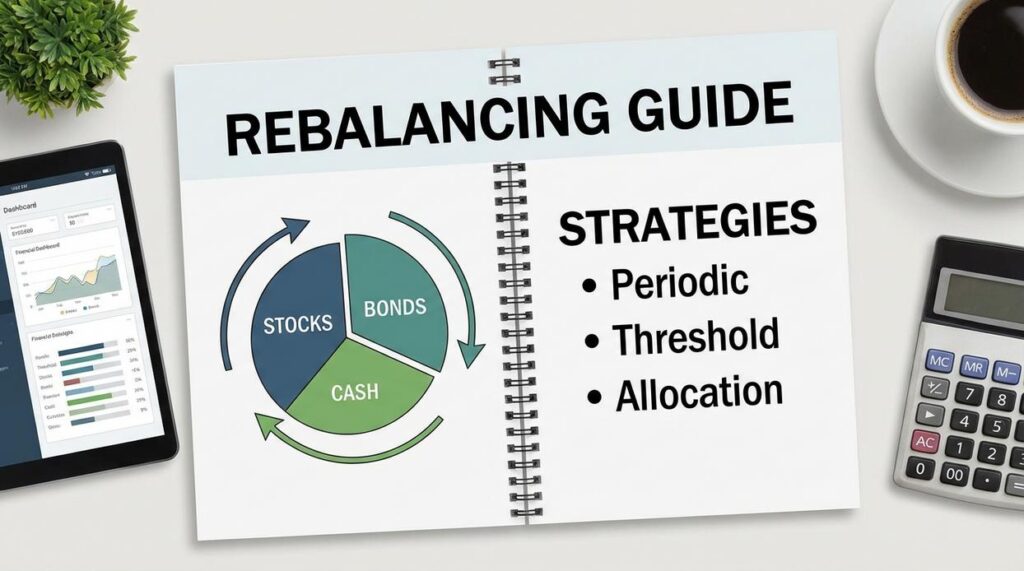
Here’s a simple portfolio rebalancing guide you can use:
• Set targets (e.g., 70% equities, 30% bonds).
• Review quarterly.
• If any asset shifts 5%+ from target, trim winners and add to laggards.
Example: A $100,000 portfolio grows to 80/20 after a stock rally. Sell $10,000 stocks, buy bonds, restoring balance.
Counterpoint: Some argue rebalancing limits upside. True—sometimes. But it also LOCKS IN GAINS and controls downside risk (discipline beats impulse). Stay consistent.
Understanding Portfolio Drift: The Silent Risk
Portfolio drift is the gradual shift of your asset allocation away from its original target due to uneven market performance. In plain terms, when one part of your portfolio grows faster than another, it starts taking up more space. Sounds harmless. It’s not.
Take a classic 60% stocks / 40% bonds portfolio. After a strong year for equities, that allocation can quietly morph into 70/30. No trades. No dramatic decisions. Just market momentum doing its thing. And suddenly, you’re carrying far more risk than you intended.
Here’s the frustration: you did the planning. You chose your allocation carefully. Then the market moves—and your risk profile changes without asking permission.
Drift isn’t just a math problem. It’s a structural shift in volatility (the speed and size of price swings). A portfolio with 70% equities can experience significantly deeper drawdowns during corrections than a 60% allocation (Vanguard research shows higher equity exposure directly increases volatility and loss potential).
That extra 10% equity weight? It can mean sharper losses in downturns—losses you never signed up for.
This is why following a disciplined portfolio rebalancing guide matters. Ignoring drift because “it’s been a good year” is how small imbalances turn into painful surprises when markets reverse.
Core Rebalancing Methodologies: The “How-To”

Rebalancing is the act of restoring your portfolio to its original target allocation—the mix of assets (like 60% stocks, 40% bonds) designed to match your risk tolerance and goals. Markets drift. Your strategy shouldn’t.
Here’s what you gain: tighter risk control, more disciplined profit-taking, and a portfolio that stays aligned with your long-term objectives. In other words, you stop reacting—and start steering.
1. Calendar-Based Rebalancing (The Disciplined Approach)
This method resets your allocations on a fixed schedule—quarterly, semi-annually, or annually.
Benefits:
- Removes emotion from decision-making.
- Creates a predictable system.
- Encourages systematic profit-taking.
If stocks surge and exceed their target weight, you trim and reallocate. Simple. Structured. Effective.
The downside? Markets don’t follow calendars. A major swing two months after your last rebalance may sit unchecked. Still, for busy professionals, the automation benefit alone makes this method powerful.
Consistency compounds.
2. Threshold-Based Rebalancing (The Responsive Approach)
Here, you rebalance only when an asset drifts beyond a preset band—say 5% or 10% from its target.
Benefits:
- Responds directly to volatility.
- Avoids unnecessary small trades.
- Maintains tighter risk exposure.
This approach is more dynamic, making it ideal during turbulent markets. It does require monitoring—but the payoff is precision. Many investors use this structure within a broader portfolio rebalancing guide to formalize decision triggers.
3. Cash Flow Rebalancing (The Opportunistic Approach)
Instead of selling, you rebalance using contributions or withdrawals.
Add money? Buy underweight assets.
Withdraw? Sell overweight positions.
Benefits:
- Minimizes transaction costs.
- Reduces taxable events.
- Enhances long-term efficiency.
This method aligns closely with proven tax efficient portfolio planning techniques for investors.
If you’re actively investing or drawing income, this approach quietly improves after-tax returns (and keeps more capital compounding where it belongs).
Advanced Considerations for Strategic Investors
Minimizing Tax Drag
Most investors obsess over returns and ignore tax drag (the silent reduction of gains due to taxes). Conventional wisdom says “rebalance regularly.” I disagree—where you rebalance matters more than how often. Prioritize adjustments inside tax-advantaged accounts like a 401(k) or IRA to avoid triggering capital gains taxes (IRS Topic No. 409). Then consider tax-loss harvesting—selling underperforming assets to offset gains—as a complementary strategy. But don’t treat it like a magic wand; harvesting without a long-term allocation plan is just sophisticated tinkering. A disciplined portfolio rebalancing guide should account for tax location first, not last.
Managing Transaction Costs
Zero-commission trading fooled many into thinking trading is free. It’s not. Bid-ask spreads, fund expense ratios, and market impact still exist (SEC.gov). Rebalancing too frequently can quietly erode returns. Sometimes doing less is the advanced move. Weigh the marginal benefit of alignment against the real cost of execution.
Complexity with Leverage
With leverage, drift isn’t cosmetic—it’s combustible. Small allocation shifts can amplify volatility, affect margin requirements, and accelerate losses. In leveraged portfolios, rebalancing isn’t optional housekeeping; it’s structural risk control.
Developing Your Personal Rebalancing Framework
There’s no one-size-fits-all approach to rebalancing. What works for a 28-year-old aggressive investor might rattle a retiree who values stability. So ask yourself: how much volatility can you actually tolerate before you panic-sell? And how long is your real investment time horizon?
Next, consider transaction costs and taxes. Frequent trades can quietly erode returns (yes, even when markets cooperate). Have you calculated the after-tax impact?
To stay disciplined, create an Investment Policy Statement. For example: “I will rebalance quarterly or when allocations drift 5%.” A written portfolio rebalancing guide removes emotion—and second-guessing—when markets swing.
From Strategy to Action: Mastering Your Portfolio
You now understand the strategies behind portfolio balance. But knowledge alone doesn’t steady the ship—you have to adjust the sails. An unmanaged portfolio doesn’t sit quietly; it drifts. Markets hum, screens flicker red and green, and without action, your risk exposure shifts beneath your feet (usually when you least expect it).
Some argue rebalancing is unnecessary tinkering. If the market is rising, why interrupt momentum? Fair question. Yet unchecked growth in one asset class can quietly concentrate risk, like a room slowly overheating.
Discipline is your anchor. A rules-based approach, like a structured portfolio rebalancing guide, keeps emotions from steering.
As you consider the right moment to rebalance your investment portfolio, it’s also an opportune time to evaluate your financial health overall, which may include designing an optimal debt repayment schedule to ensure your investments can thrive – for more details, check out our How to Design an Optimal Debt Repayment Schedule.
- Review your allocation today and choose a trigger—calendar-based or threshold-based—to act decisively.
Take Control of Your Next Financial Move
You set out to better understand leverage, debt structuring, and how high-risk investment mechanics can either accelerate or undermine your wealth strategy. Now you have a clearer view of how progress points, capital efficiency, and disciplined decision-making fit together.
The real pain point isn’t lack of opportunity — it’s misalignment. Poor structure, unmanaged leverage, and neglected risk exposure can quietly erode returns and magnify losses. Without a clear framework, even strong portfolios drift off course.
That’s why your next move matters. Start by reviewing your allocations, stress-testing your leverage, and implementing a portfolio rebalancing guide that aligns your risk tolerance with your long-term objectives. Small structural adjustments today can prevent major financial setbacks tomorrow.
If you’re serious about optimizing performance while controlling downside risk, take action now. Apply these strategies, refine your debt positioning, and recalibrate your portfolio with precision. The sooner you act, the sooner your capital starts working with intention instead of uncertainty.

 Ask Elveris Xelthanna how they got into wealth portfolio planning and you'll probably get a longer answer than you expected. The short version: Elveris started doing it, got genuinely hooked, and at some point realized they had accumulated enough hard-won knowledge that it would be a waste not to share it. So they started writing.
What makes Elveris worth reading is that they skips the obvious stuff. Nobody needs another surface-level take on Wealth Portfolio Planning, Progress Points, High-Risk Investment Mechanics. What readers actually want is the nuance — the part that only becomes clear after you've made a few mistakes and figured out why. That's the territory Elveris operates in. The writing is direct, occasionally blunt, and always built around what's actually true rather than what sounds good in an article. They has little patience for filler, which means they's pieces tend to be denser with real information than the average post on the same subject.
Elveris doesn't write to impress anyone. They writes because they has things to say that they genuinely thinks people should hear. That motivation — basic as it sounds — produces something noticeably different from content written for clicks or word count. Readers pick up on it. The comments on Elveris's work tend to reflect that.
Ask Elveris Xelthanna how they got into wealth portfolio planning and you'll probably get a longer answer than you expected. The short version: Elveris started doing it, got genuinely hooked, and at some point realized they had accumulated enough hard-won knowledge that it would be a waste not to share it. So they started writing.
What makes Elveris worth reading is that they skips the obvious stuff. Nobody needs another surface-level take on Wealth Portfolio Planning, Progress Points, High-Risk Investment Mechanics. What readers actually want is the nuance — the part that only becomes clear after you've made a few mistakes and figured out why. That's the territory Elveris operates in. The writing is direct, occasionally blunt, and always built around what's actually true rather than what sounds good in an article. They has little patience for filler, which means they's pieces tend to be denser with real information than the average post on the same subject.
Elveris doesn't write to impress anyone. They writes because they has things to say that they genuinely thinks people should hear. That motivation — basic as it sounds — produces something noticeably different from content written for clicks or word count. Readers pick up on it. The comments on Elveris's work tend to reflect that.