If you’re searching for clear, practical insight into leveraged finance, high-risk investment mechanics, and strategic debt structuring, you’re likely looking for more than theory—you want actionable guidance that can sharpen decision-making and improve outcomes. This article is designed to meet that need directly.
We break down complex financial concepts into structured, real-world applications, showing how progress points, leverage strategies, and portfolio construction intersect in today’s market environment. Whether you’re optimizing capital efficiency or reassessing risk exposure, you’ll gain a clearer framework for evaluating opportunities and protecting downside.
Our analysis is grounded in deep market research, disciplined risk assessment models, and hands-on experience studying advanced wealth structuring techniques. Every insight is built around measurable outcomes, data interpretation, and investment performance tracking to ensure strategies are not only ambitious—but accountable.
By the end, you’ll understand how to structure leverage intelligently, manage volatility strategically, and align high-risk tactics with long-term portfolio objectives.
A Smarter Way to Measure Performance
Your account balance tells you what you have, not how well you earned it. That distinction matters. Real insight starts with investment performance tracking that separates market movement from skill. First, calculate time-weighted return, which removes the impact of deposits and withdrawals. Next, compare results to a relevant benchmark like the S&P 500 (a simple reality check). Then evaluate risk-adjusted metrics such as the Sharpe ratio, defined as excess return per unit of volatility. Pro tip: track drawdowns to see how deep losses run before recovery. This framework links data to better decisions consistently.
The Two Essential Lenses: Measuring Strategy vs. Investor Performance
If you’ve ever looked at your portfolio and thought, “Wait… why doesn’t this match the market’s return?” you’re not alone. The confusion usually comes down to mixing up two very different lenses.
First, Time-Weighted Rate of Return (TWRR). This measures the PURE performance of your investments, stripping out the impact of deposits and withdrawals. In simple terms, it answers: How did my strategy perform?
Imagine you bought an S&P 500 ETF and added money at random times. TWRR isolates the ETF’s performance itself. That’s why professionals use it for investment performance tracking and manager comparisons (CFA Institute).
Pro tip: Use TWRR when comparing your stock-picking results to a benchmark like the S&P 500. It keeps the playing field fair.
Second, Money-Weighted Rate of Return (MWRR), also called Internal Rate of Return (IRR). This metric factors in WHEN and HOW MUCH you invested. It answers: How well did I deploy my capital?
Example: If you invested heavily during a market dip in 2022 and scaled back during highs, your MWRR could outperform your TWRR. That’s strong capital timing (think “buy the dip,” but with discipline, not memes).
When to Use Each
- Use TWRR to evaluate STRATEGY.
- Use MWRR/IRR to evaluate YOUR DECISIONS.
Step-by-step:
- Pull your portfolio data.
- Separate cash flow dates.
- Run TWRR for asset comparison.
- Run IRR to assess personal results.
One measures skill in selecting assets. The other measures skill in allocating money. CONFUSE THEM, and you misjudge performance. Use both, and you see the full picture.
Performance in Context: The Critical Role of Benchmarking
A 12% annual return sounds great, but in reality, it’s just a number floating in space. After all, if your market delivered 20%, that “win” is actually a loss in disguise. That’s where benchmarking comes in. It provides context, meaning it compares your results to a relevant standard. Without it, you’re basically grading your own exam (and yes, we’ve all been tempted).
However, you must compare apples to apples. The S&P 500 fits U.S. large-cap stocks, the Bloomberg U.S. Aggregate Bond Index suits bonds, and the MSCI EAFE tracks international equities. Using one broad index for everything is like judging a decathlon with a stopwatch alone.
Next, consider alpha, which is the excess return above your benchmark. If you earn 15% when the index returns 12%, your alpha is 3%. That gap reveals whether active decisions truly add value.
On the other hand, critics argue benchmarks oversimplify diversified portfolios. Fair. Still, disciplined investment performance tracking demands a tailored blend of indices, not a convenient shortcut. Pro tip: revisit benchmarks annually as allocations shift. Because, ultimately, context turns raw returns into real insight. Otherwise, you’re investing blindfolded at high noon. In volatile markets.
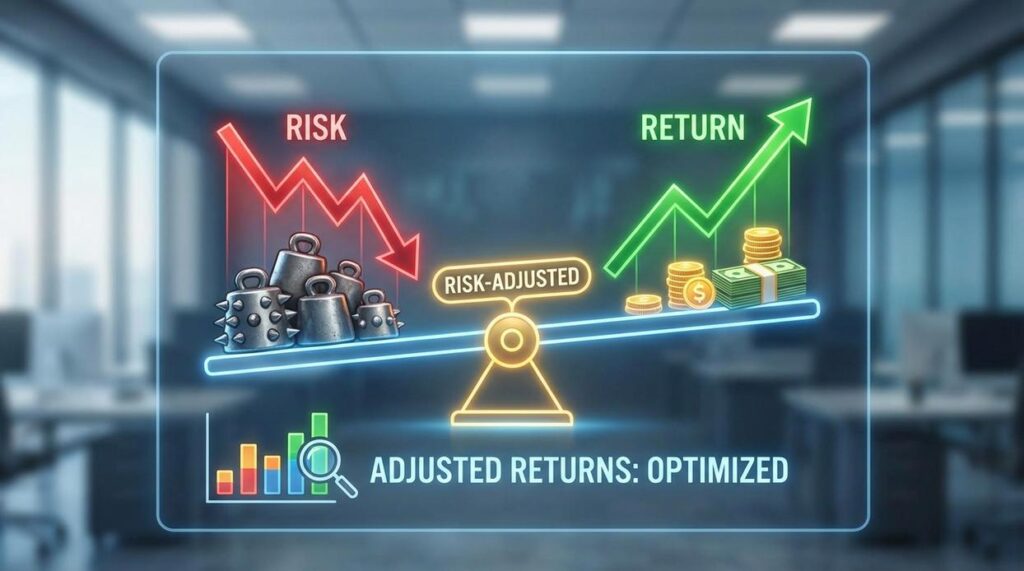
Are Your Returns Worth the Risk? Unpacking Risk-Adjusted Metrics

Two portfolios each post a 10% average annual return. Sounds identical, right? Not quite. One climbed steadily; the other swung like a roller coaster at Six Flags (fun—until you’re strapped in). That difference is volatility—how widely returns fluctuate over time. According to Vanguard, higher volatility often increases the likelihood of emotional, poorly timed decisions (Vanguard, 2022).
The Sharpe Ratio: Return per Unit of Risk
The Sharpe Ratio measures how much excess return (return above the risk-free rate, like U.S. Treasury bills) you earn per unit of total volatility.
Formula: (Portfolio Return − Risk-Free Rate) ÷ Standard Deviation
A Sharpe Ratio above 1.0 is generally considered good; above 2.0 is very strong (Morningstar methodology guidelines).
Practical tip: When reviewing funds, compare Sharpe Ratios within the same asset class. A 1.2 in equities means something very different than a 1.2 in bonds.
Some argue volatility doesn’t matter if long-term returns are high. But unless you’re emotionally immune to 30% swings, risk-adjusted context is critical.
The Sortino Ratio: Focusing on “Bad” Volatility
The Sortino Ratio refines Sharpe by penalizing only downside deviation—harmful drops. For investors primarily worried about losses, this often paints a clearer picture.
Maximum Drawdown: The Gut-Check Metric
Maximum drawdown shows the largest peak-to-trough decline. If your portfolio fell 40% in 2008, that’s your real-world stress test.
Review your investment performance tracking reports and ask: Could I tolerate that decline again?
For broader context on goal alignment, see short term vs long term progress benchmarks in finance.
Returns matter. But returns relative to risk determine whether your strategy actually fits your life.
Building Your Monitoring Dashboard: Tools and Cadence
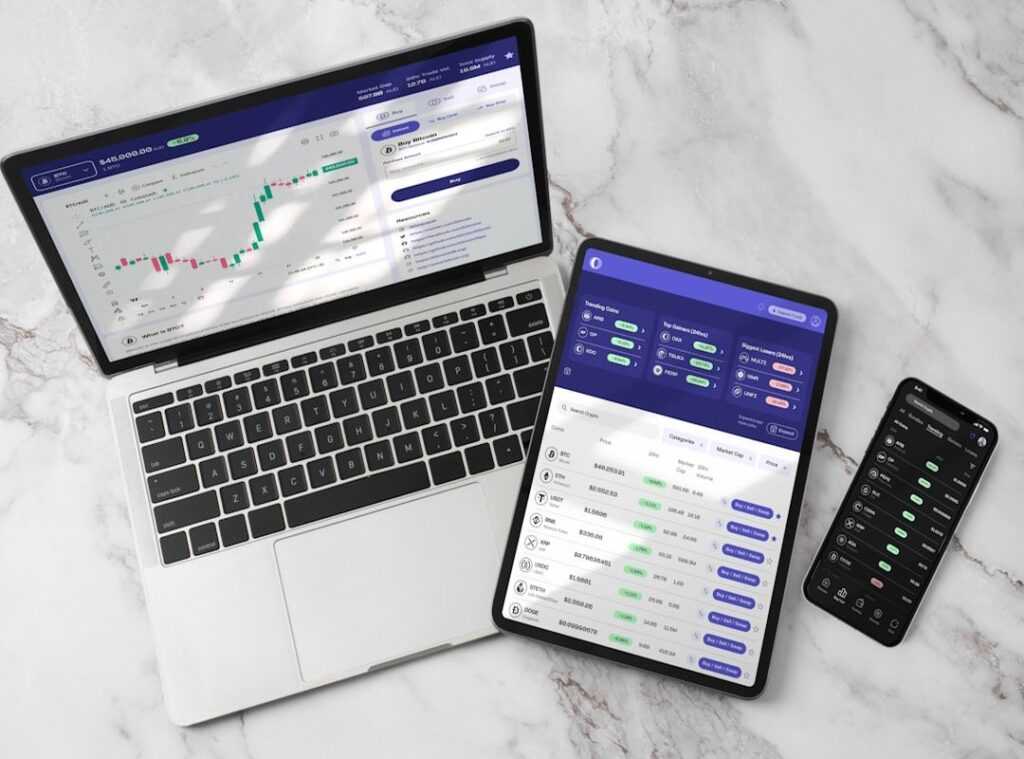
Simple spreadsheet or full platform—what fits you? A custom sheet with XIRR can handle cash-flow timing; tools like Empower or Morningstar automate the math. Do you really need sophistication, or just clarity? Pick the tool you’ll actually use.
Tempted to check daily? Why invite stress? Set a monthly pulse check, then a deeper quarterly review.
For investment performance tracking, ask: Are you measuring TWRR, MWRR, alpha vs. benchmark, Sharpe Ratio, and Maximum Drawdown? If one slipped, would you notice—or just hope for the best?
Discipline beats dashboards loaded with shiny features. Every time.
From Analysis to Action: Making Smarter Investment Decisions
You now have the tools to shift from guessing to investment performance tracking with precision. Instead of hoping your strategy works, you can verify it.
Here’s what that looks like in practice:
- TWRR and MWRR: Measure pure performance versus cash-flow-influenced returns (critical if you actively add capital).
- Benchmarking: Compare results against a relevant index to see if you’re outperforming or just riding the market.
- Sharpe Ratio: Quantify risk-adjusted returns—because gains mean little without context.
Some argue benchmarks restrict flexibility. But data creates freedom, not limits.
Start small: compare your portfolio to its primary benchmark during your next review (see this practical guide: https://example.com).
To truly understand how to measure investment progress effectively, it’s essential to grasp some fundamental concepts addressed in our previous article on the mechanics behind startup investing, titled ‘Venture Capital Basics: Mechanics Behind Startup Investing.’
Take Control of Your Leverage Strategy Today
You came here to better understand how leveraged finance, debt structuring, and high-risk investment mechanics can accelerate—or damage—your portfolio. Now you have a clearer view of the risks, the structural considerations, and the strategic edge that disciplined planning provides.
The reality is this: without precise structuring and investment performance tracking, leverage can quietly erode gains and magnify losses. That uncertainty is the pain point most investors underestimate—until it’s too late.
The advantage belongs to those who act with clarity. Apply the frameworks outlined here. Stress-test your positions. Reassess your debt exposure. Tighten your portfolio strategy around measurable performance benchmarks.
If you’re serious about optimizing returns while controlling downside risk, now is the time to take action. Use proven leverage strategies, implement disciplined investment performance tracking, and refine your portfolio with a structured approach trusted by high-level investors. Don’t leave performance to chance—start recalibrating your strategy today.

 Ask Elveris Xelthanna how they got into wealth portfolio planning and you'll probably get a longer answer than you expected. The short version: Elveris started doing it, got genuinely hooked, and at some point realized they had accumulated enough hard-won knowledge that it would be a waste not to share it. So they started writing.
What makes Elveris worth reading is that they skips the obvious stuff. Nobody needs another surface-level take on Wealth Portfolio Planning, Progress Points, High-Risk Investment Mechanics. What readers actually want is the nuance — the part that only becomes clear after you've made a few mistakes and figured out why. That's the territory Elveris operates in. The writing is direct, occasionally blunt, and always built around what's actually true rather than what sounds good in an article. They has little patience for filler, which means they's pieces tend to be denser with real information than the average post on the same subject.
Elveris doesn't write to impress anyone. They writes because they has things to say that they genuinely thinks people should hear. That motivation — basic as it sounds — produces something noticeably different from content written for clicks or word count. Readers pick up on it. The comments on Elveris's work tend to reflect that.
Ask Elveris Xelthanna how they got into wealth portfolio planning and you'll probably get a longer answer than you expected. The short version: Elveris started doing it, got genuinely hooked, and at some point realized they had accumulated enough hard-won knowledge that it would be a waste not to share it. So they started writing.
What makes Elveris worth reading is that they skips the obvious stuff. Nobody needs another surface-level take on Wealth Portfolio Planning, Progress Points, High-Risk Investment Mechanics. What readers actually want is the nuance — the part that only becomes clear after you've made a few mistakes and figured out why. That's the territory Elveris operates in. The writing is direct, occasionally blunt, and always built around what's actually true rather than what sounds good in an article. They has little patience for filler, which means they's pieces tend to be denser with real information than the average post on the same subject.
Elveris doesn't write to impress anyone. They writes because they has things to say that they genuinely thinks people should hear. That motivation — basic as it sounds — produces something noticeably different from content written for clicks or word count. Readers pick up on it. The comments on Elveris's work tend to reflect that.