
Debt. It’s a word that can make your stomach churn and your heart race. But is it always the enemy?
Let’s talk about the benefits and pitfalls debt brings into our lives. You might already know the basics, but I’m here to dive deeper into what this means for you and your financial future.
Does debt keep you awake at night, wondering if it’s a blessing or a curse? You’re not alone. We all wrestle with this balance.
Debt can be a tool or a trap, depending on how you use it.
In this piece, we’ll explore the highs and lows of borrowing, shedding light on when debt can boost your wealth and when it might send you spiraling. We’ll look at real-world takeaways and strategies that could change how you view debt. Trust me, you’ll want to know how to avoid the common traps and use debt to your advantage.
Ready to open up the real story? Let’s get started.
The Upside: How Debt Can Be a Solid Financial Tool
Let’s talk about debt. Yeah, I said it. Debt isn’t the villain it’s often made out to be.
Think of it as use. A way to move mountains with a tiny pebble of your own capital. Ever thought about owning a home?
You probably can’t buy it outright. But with a mortgage, you can control a valuable asset like real estate. That’s use for major investments.
Real estate is a classic example. You take out a loan, buy a home, and over time, that home’s value usually increases. It’s like getting in on the ground floor of a skyscraper.
Sure, not every investment pays off, but when it does, it can be life-changing.
Now, building your credit history is another story. Responsible use of credit cards and loans boosts your credit score. And trust me, you’ll want a strong one for future financial opportunities.
Whether it’s for a car loan or a business venture (maybe building career leveraged finance), it’s important.
Then there are tax advantages. Did you know interest on some debts (like mortgages or student loans) can be tax-deductible? It effectively lowers your borrowing costs.
It’s like getting a small refund for being responsible with your debt.
And let’s not forget cash flow management. Debt can help you stay liquid for emergencies or opportunities. No need to sell long-term investments in a panic.
Think of it as a safety net.
Sure, there are benefits and pitfalls to debt. But when used wisely, it can be a solid tool.
The Downside: Navigating the Real Risks of Borrowing
Borrowing isn’t all sunshine and rainbows. Sure, it can boost your financial game, but it can also smack you down hard. Ever thought about how interest piles up?
Let’s say you’ve got a credit card with a high-interest rate. You buy a $1,000 gadget, but by the time you’re done paying it off (years later), you’ve forked over double that. Ouch, right?
That’s the high cost of interest at work.
And it doesn’t stop there. Those hefty monthly payments? They choke your cash flow.
Suddenly, your disposable income shrinks. Want to save for a vacation or invest in something cool? Forget it.
You’re stuck funneling money into debt. That’s not financial freedom. It’s like running on a treadmill with no end in sight.
Your credit score takes a nosedive, and good luck getting future loans. You might even lose assets. Not fun.
Then there’s the ugly side of missed payments. Defaulting on debt isn’t just a slap on the wrist. It’s a full-blown financial disaster.
Plus, the psychological burden is real. Debt-induced anxiety can mess with your head and cloud your decision-making.
If you want a more detailed breakdown of the benefits and pitfalls debt can bring, check out expert resources. But trust me, it’s key to weigh both sides before jumping into the borrowing pool.
Good Debt vs. Bad Debt: The Key To Smart Choices
This is it. The heart of making smart financial decisions. It’s not about dodging all debt.
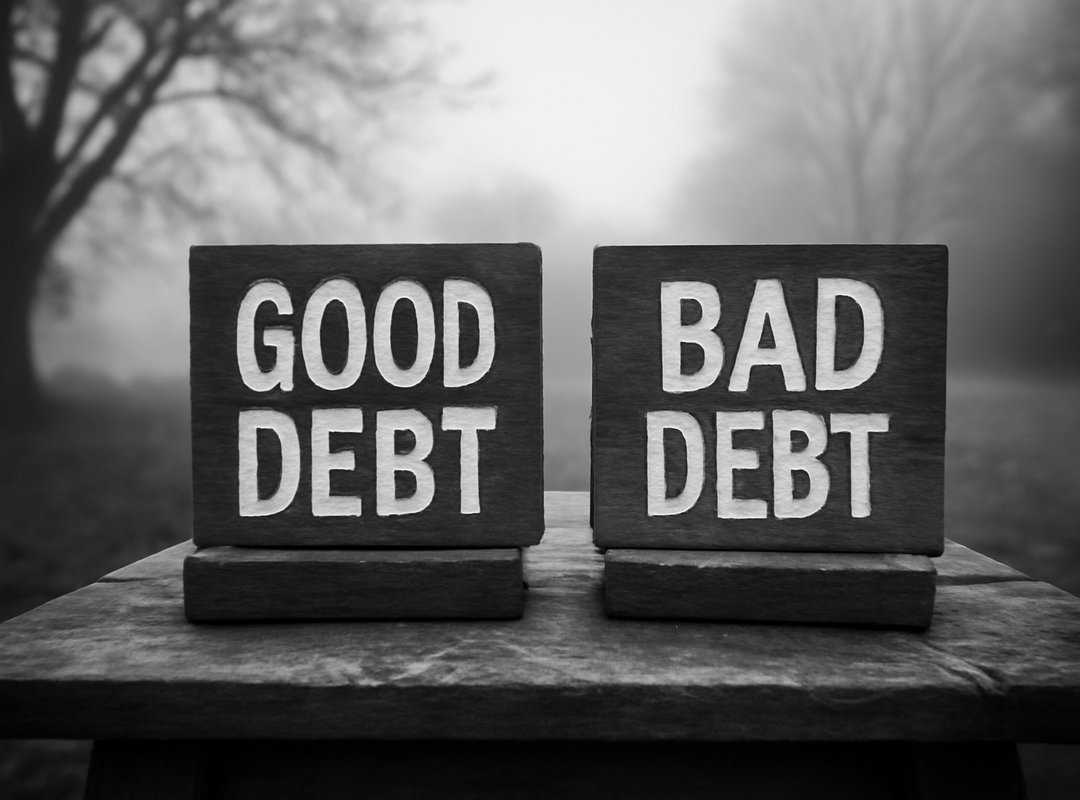
You can’t escape it (unless you’re living off the grid, in which case, nice). But it’s about making debt work for you. So let’s break it down: the good vs. bad debt game.
Good debt is like a secret weapon. It’s debt that fuels future value or boosts income. Think about a mortgage for a house in a solid neighborhood.
Your home should appreciate over time. Or what about a student loan for a field that’s hot? You expect a return on that education investment.
Maybe a business loan? If researched well, it could skyrocket your earnings.
On the flip side, bad debt’s a trap. This is debt that clings to stuff losing value. It’s like a credit card bill for vacations or clothes.
They don’t grow in value; they just drain resources (and happiness in the long run). Buying a car? Most cars drop in value before that first drive home, especially with a long-term deal.
You’re left with interest and no asset to match.
So how do you figure out what you’re dealing with? Ask yourself: “Will this purchase grow in value?” or “Will this help me earn more?” And of course, “Is the interest rate something I can handle?” Keep these simple questions at your disposal.
But don’t just take my word for it. If you’re curious about strategies for financial moves like successful leveraged buyouts, check out this topic. These strategies could turn your view on debt upside down.
Remember, understanding benefits and pitfalls of debt is key. But it’s not just about knowing them. It’s about making the right call when it matters.
So stay sharp.
Master Your Debt: Strategies That Work
Debt can feel like a mountain. But let’s face it, ignoring it won’t make it disappear. You need a plan.
First, know your numbers. The debt-to-income (DTI) ratio is key. Calculate it by dividing your total monthly debt payments by your gross income.
This ratio tells you if you’re treading water or drowning.
Once you know your numbers, choose a repayment plan. The Snowball method lets you pay off the smallest debt first. It’s great for quick wins and motivation.
On the flip side, the Avalanche method targets high-interest debts first. It saves money long-term. The best choice?
The one you can stick with.
Now, let’s talk consolidation. If you’ve got high-interest debt, consolidating or refinancing might be smart. Consider personal loans or balance transfer cards to lower those rates.
It’s a solid move. But be careful. The benefits and pitfalls of debt management are real.
Lower interest can help, but only if you don’t rack up new debt.
In the end, it’s about taking control. You don’t want debt controlling you. So, what’s your next step?
Knowing your numbers? Picking a plan? Or maybe consolidating?
Whatever it is, start today.
Debt: Friend or Foe?
You’ve done it. You’ve moved past that fear and confusion about debt. Now, it’s clear how the benefits and pitfalls debt can shape your financial journey.
Knowing the difference between ‘good’ and ‘bad’ debt is key. And you’ve got that now.
It’s not about avoiding debt altogether. It’s about smart management. No more letting debt control you.
Instead, you decide its role in your life.
So here’s what you do next: Take a few minutes today to look at your own financial picture. Ask yourself, is your debt working for you? If not, identify one small step you can take this week to change that.
Don’t let debt be your enemy when it can be your ally. Start now.

 Gary Cuadradovona writes the kind of progress points content that people actually send to each other. Not because it's flashy or controversial, but because it's the sort of thing where you read it and immediately think of three people who need to see it. Gary has a talent for identifying the questions that a lot of people have but haven't quite figured out how to articulate yet — and then answering them properly.
They covers a lot of ground: Progress Points, Debt Structuring Techniques, Wealth Portfolio Planning, and plenty of adjacent territory that doesn't always get treated with the same seriousness. The consistency across all of it is a certain kind of respect for the reader. Gary doesn't assume people are stupid, and they doesn't assume they know everything either. They writes for someone who is genuinely trying to figure something out — because that's usually who's actually reading. That assumption shapes everything from how they structures an explanation to how much background they includes before getting to the point.
Beyond the practical stuff, there's something in Gary's writing that reflects a real investment in the subject — not performed enthusiasm, but the kind of sustained interest that produces insight over time. They has been paying attention to progress points long enough that they notices things a more casual observer would miss. That depth shows up in the work in ways that are hard to fake.